Selecting the optimal CNC machine tools is a critical decision that directly impacts manufacturing efficiency, product quality, and overall operational costs. With over 30 years of expertise in CNC machinery manufacturing, Ningbo Kaibo CNC Machinery Co., Ltd. – the national standard setter for CNC engraving and milling machines – presents this systematic guide to help manufacturing enterprises navigate the complex selection process.
The selection process should begin with a comprehensive analysis of your specific manufacturing requirements rather than focusing solely on machine specifications. This ensures the chosen equipment aligns with your production goals and operational needs.
Evaluate the required dimensional accuracy, surface finish, and repeatability for your components. This directly impacts the selection between standard precision machines and high-precision models.
Ningbo Kaibo CNC's machining centers offer positioning accuracies from ±0.003mm to ±0.01mm, catering to diverse precision requirements across industries.
High-volume production typically benefits from machines with faster traverse rates, automatic tool changers, and higher spindle speeds. For low-volume, high-variety production, flexibility and quick setup times become more critical factors.
Consider how the CNC machine will integrate with existing production processes. This includes material handling systems, automation solutions, and compatibility with CAD/CAM software and other manufacturing technologies.
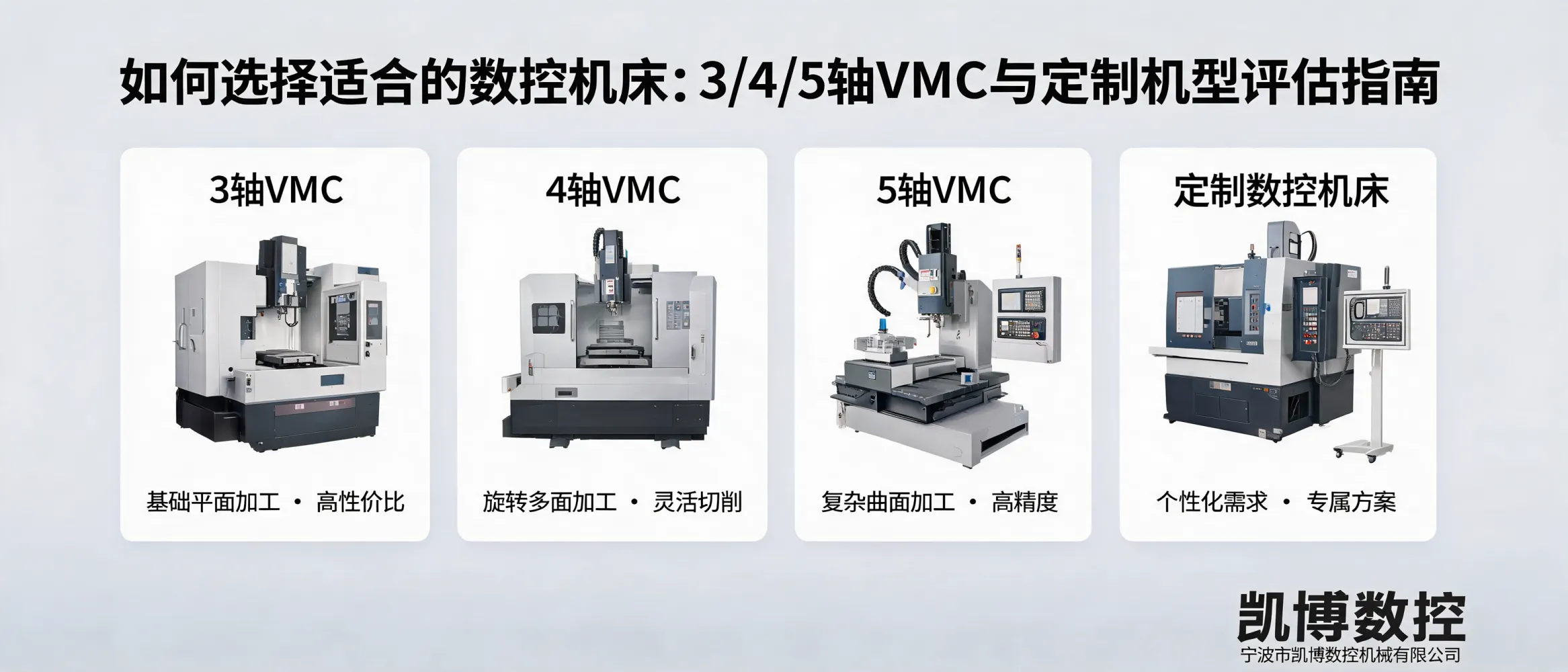
| Machine Type | Key Applications | Best For |
|---|---|---|
| 3-Axis Vertical Machining Centers | Flat surfaces, simple 3D contours, drilling, tapping | General machining, moderate complexity parts, cost-sensitive applications |
| 4/5-Axis Vertical Machining Centers | Complex geometries, multi-sided parts, undercuts, contoured surfaces | Aerospace components, mold making, medical parts, high-precision complex parts |
| CNC Engraving and Milling Machines | Fine detail work, engraving, precision milling, prototyping | Jewelry, molds, signage, precision components, artistic applications |
| Custom CNC Machines | Specialized production requirements, unique part geometries, integration with existing systems | Unique manufacturing processes, proprietary components, specific industry needs |
Beyond the initial purchase price, consider these ongoing cost factors:
Consider the manufacturer's service network when selecting CNC equipment. Ningbo Kaibo CNC maintains 26 sales and service offices worldwide, ensuring prompt technical support, maintenance, and spare parts availability – critical factors for minimizing production downtime.
As a high-tech enterprise with over 28 years of experience and the distinction of being the制定者 of national standards for CNC engraving and milling machines, Ningbo Kaibo CNC stands ready to assist manufacturing enterprises in selecting the optimal CNC solutions.
Our comprehensive range of 3/4/5-axis vertical machining centers, CNC engraving and milling machines, and custom CNC solutions, combined with our extensive service network, ensures that we can meet the diverse needs of manufacturers across industries and geographies.
To discuss your specific requirements and receive personalized guidance on CNC machine selection, contact our technical experts today.