In today’s competitive shoe mold manufacturing landscape, precision and efficiency are essential for delivering high-quality products. Selecting the right 5-axis CNC milling machine with superior rigidity is foundational to meeting these demands. This article delves into the core technologies and features defining optimal 5-axis machining solutions tailored to shoe mold production, exploring how advanced mechanical design and intelligent control systems elevate product quality and operational throughput.
Conventional 3-axis CNC machines, while effective for basic geometries, struggle with the complex contours and undercuts typical in shoe mold components. In contrast, 5-axis CNC machining enables integrated movements on three linear axes (X, Y, Z) plus two rotational axes (A and C). This capacity allows the cutting tool to access multiple surfaces in a single setup, substantially reducing production time and enhancing dimensional accuracy.
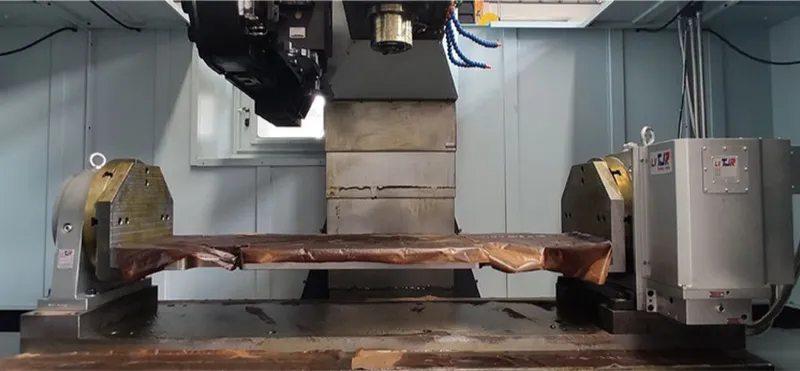
Studies indicate that 5-axis systems can cut machining time by up to 35% and improve surface finish quality by more than 20%, critical factors in mold longevity and part fit. The integration of a rotary worktable further streamlines complex operations by facilitating continuous multi-angle machining without manual repositioning, minimizing errors and maintaining consistent tolerances within ±0.01 mm.
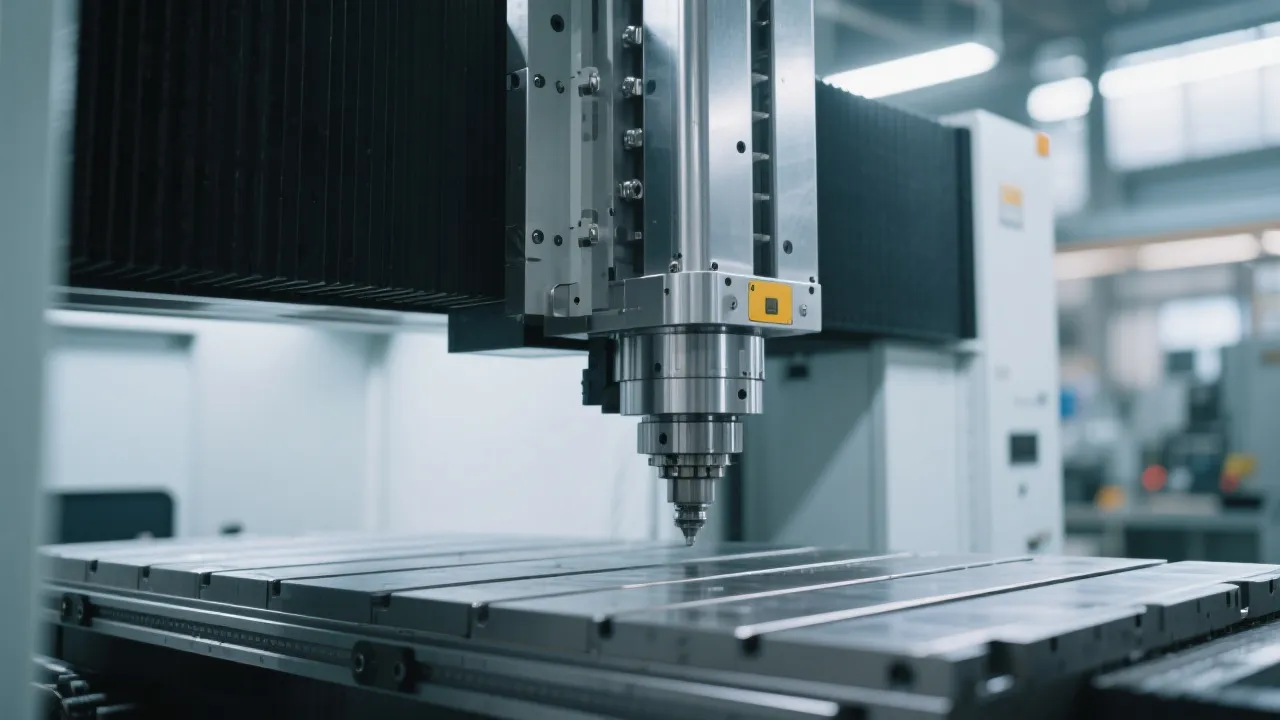
Rigidity plays a vital role in maintaining accuracy under cutting forces. High-rigidity designs often incorporate heavy-duty casting with optimized rib structures and thermal stability materials, reducing vibration and displacement. This structural integrity supports stable machining at feed rates exceeding 5000 mm/min while maintaining micron-level precision.
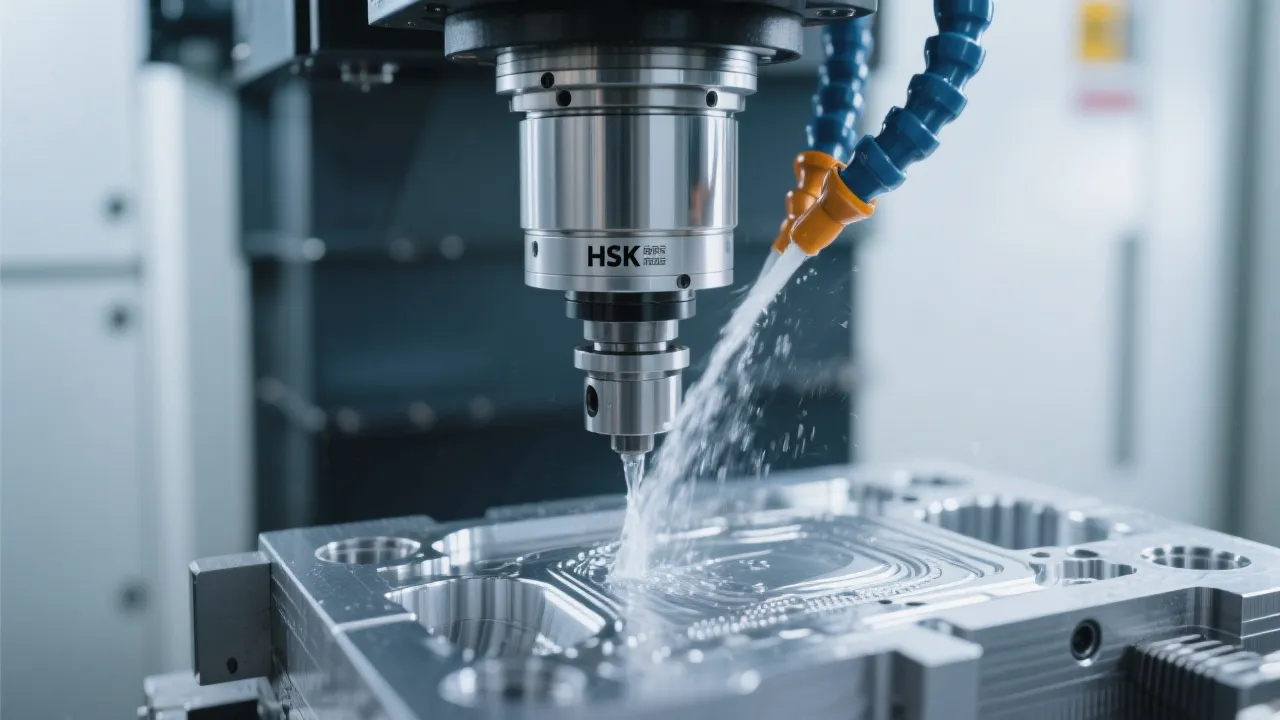
Complementing mechanical strength, high-torque electric spindles provide the power and rotational stability needed for consistent cutting, even with hard mold materials like stainless steel and aluminum alloys. Spindles with torque ratings above 15 Nm and speeds up to 24,000 RPM ensure balance between surface finish quality and cycle time reduction, critical for meeting tight production schedules.
The Syntec CNC controller, known for its advanced path smoothing algorithms and multi-axis synchronization, helps manufacturers push the boundaries of machining accuracy. By dynamically adjusting feed rates according to tool load and optimizing interpolation between axes, Syntec controllers reduce mechanical shock and extend tool life by up to 30%.
Additionally, Syntec’s user-friendly interface supports customizable macros and integrated automation features such as tool measurement and adaptive feed control. These capabilities streamline workflow and reduce operator intervention, improving overall equipment effectiveness (OEE) by up to 15%.
Consider a shoe sole mold featuring intricate waveforms and deep undercuts. Using 5-axis milling with a high-rigidity machine equipped with a high-torque spindle, manufacturers achieve:
These enhancements collectively contribute to shortened lead times and increased mold lifespan, giving manufacturers a competitive edge in the fast-paced footwear industry.
When selecting a 5-axis CNC milling machine for shoe mold manufacture, consider following criteria:
Integrating these features will maximize machining stability and operational efficiency, translating into better product quality and lower manufacturing costs.
Dive deeper into optimizing your shoe mold manufacturing process and Download the Complete Technical Whitepaper to access detailed data, case studies, and selection checklists designed to empower your production.
Ready to see these benefits in action? Schedule a Free Case Demonstration Today and experience firsthand how advanced 5-axis machining can transform your shoe mold production capabilities.