
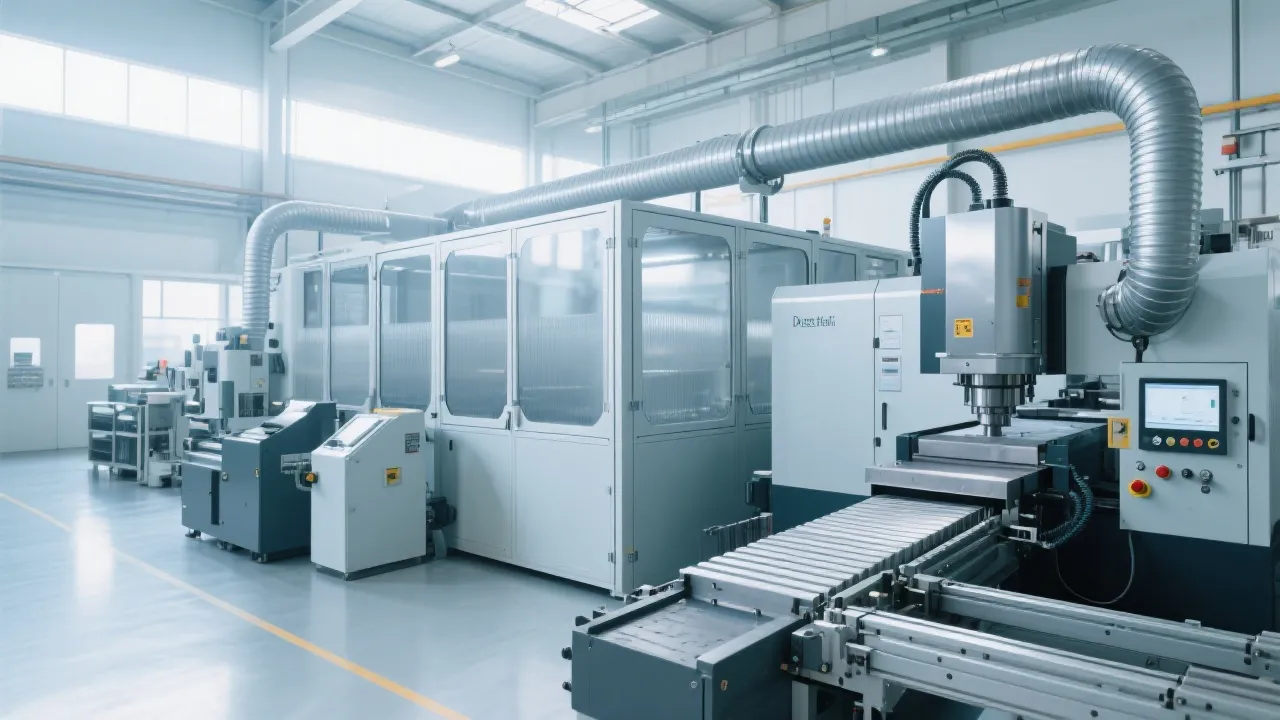
The shoe last manufacturing industry faces relentless pressure to balance precision, speed, and cost-effectiveness. Traditional milling methods often struggle to meet the intricate surface requirements and complex geometries demanded by modern shoe designs. From this perspective, the five-axis CNC milling machine DC6060A emerges as a game changer. Specially engineered for shoe last applications, this machine leverages its advanced rotary table and curved surface processing capabilities to optimize production workflows and quality outcomes.
Shoe last production is characterized by complex concave and convex curves requiring precise contouring. Historically, this involved multiple setups and manual adjustments, leading to inconsistencies and extended lead times. The DC6060A’s five-axis continuous movement allows simultaneous multi-directional milling, reducing part setup changes by up to 60%. This capability directly tackles issues of low throughput and quality variability by enabling uninterrupted machining of complex geometries with minimal human intervention.
At the heart of the DC6060A is its tailor-made rotary worktable, engineered to align precisely with the unique contours of shoe lasts. This design unlocks multi-axis rotation during milling, facilitating multi-angle access to the workpiece without reclamping. As a result, manufacturers have reported a 30% improvement in machining precision and a reduction of surface defects by 45%. The seamless integration of rotation and five-axis control ensures repeatable accuracy across volumes, critical for maintaining consistent shoe last shapes.
Manufacturers transitioning from three-axis machines and manual processes to the DC6060A five-axis system report standout performance metrics:
These improvements translate into tangible economic benefits, illustrated by a leading shoe last factory that reported a 25% reduction in overall production costs within six months of integration.
Prior to adopting the DC6060A, the factory’s shoe last machining involved multiple fixtures and manual finishing steps stretching the lead time to 48 hours per batch. Post-implementation, continuous five-axis operations streamlined processes enabling batches to complete in under 22 hours. Additionally, quality stability reduced customer complaints by 38%, reinforcing the brand’s competitive edge.
The integration of five-axis CNC milling with Industry 4.0 solutions, such as IoT sensors and AI-driven toolpath optimization, promises an even greater leap in efficiency and customization capacity. DC6060A is positioned to evolve beyond a standalone machine into a node within a smart manufacturing network, empowering users to produce bespoke lasts on-demand with minimal downtime and waste.




Join the Conversation
Have questions or experience with five-axis milling? Leave your thoughts below!