CNC Machine Tool Selection Guide: A Systematic Approach from Workpiece Material to Processing Technology
02 08,2026
Ningbo Kaibo CNC Machinery Co., Ltd.
Industry Guide
This guide provides a systematic CNC machine tool selection framework for manufacturing enterprises, analyzing workpiece materials, processing dimensions, precision requirements, and automation needs to help choose between vertical machining centers, CNC engraving and milling machines, and custom CNC machines. Brought to you by Ningbo Kaibo CNC Machinery Co., Ltd.
Selecting the right CNC machine tool is a critical decision that directly impacts manufacturing efficiency, product quality, and return on investment. With over 25 years of expertise as a national standard setter for CNC engraving and milling machines, Ningbo Kaibo CNC Machinery Co., Ltd. presents this systematic guide to help manufacturing enterprises navigate the selection process—from workpiece analysis to technology matching.
The Core Principles of CNC Machine Selection
Effective CNC machine selection requires a holistic evaluation of multiple interrelated factors. Rather than focusing solely on machine specifications, successful selection aligns equipment capabilities with your specific manufacturing requirements and long-term production goals.
Material-Centric Approach
The workpiece material dictates machine rigidity, spindle power, and tooling requirements—foundational considerations for optimal performance.
Precision-First Thinking
Accuracy requirements must guide decisions on machine structure, control systems, and measurement capabilities to ensure consistent quality.
Process Integration
Machine selection should optimize your complete manufacturing workflow, considering both current processes and future expansion needs.
Step 1: Workpiece Analysis – The Foundation of Selection
Material Characteristics Assessment
| Material Type |
Key Considerations |
Recommended Machine Category |
| Aluminum & Non-ferrous Metals |
High-speed machining requirements, chip evacuation |
CNC Engraving and Milling Machines, 3-axis VMC |
| Steel & Ferrous Metals |
Rigidity, spindle torque, cutting force management |
4/5-axis Vertical Machining Centers |
| Composite Materials |
Specialized tooling, low cutting forces, surface finish |
Custom-configured CNC Machines |
Dimensional & Geometric Analysis
The size, complexity, and geometry of your workpieces directly influence machine selection:
- Maximum workpiece dimensions – Determine required X, Y, Z axis travel
- Part complexity – Simple 2.5D parts vs. complex 3D contours vs. multi-sided components
- Weight considerations – Heavier workpieces require more robust machine construction
- Fixture requirements – Consideration for clamping systems and setup efficiency
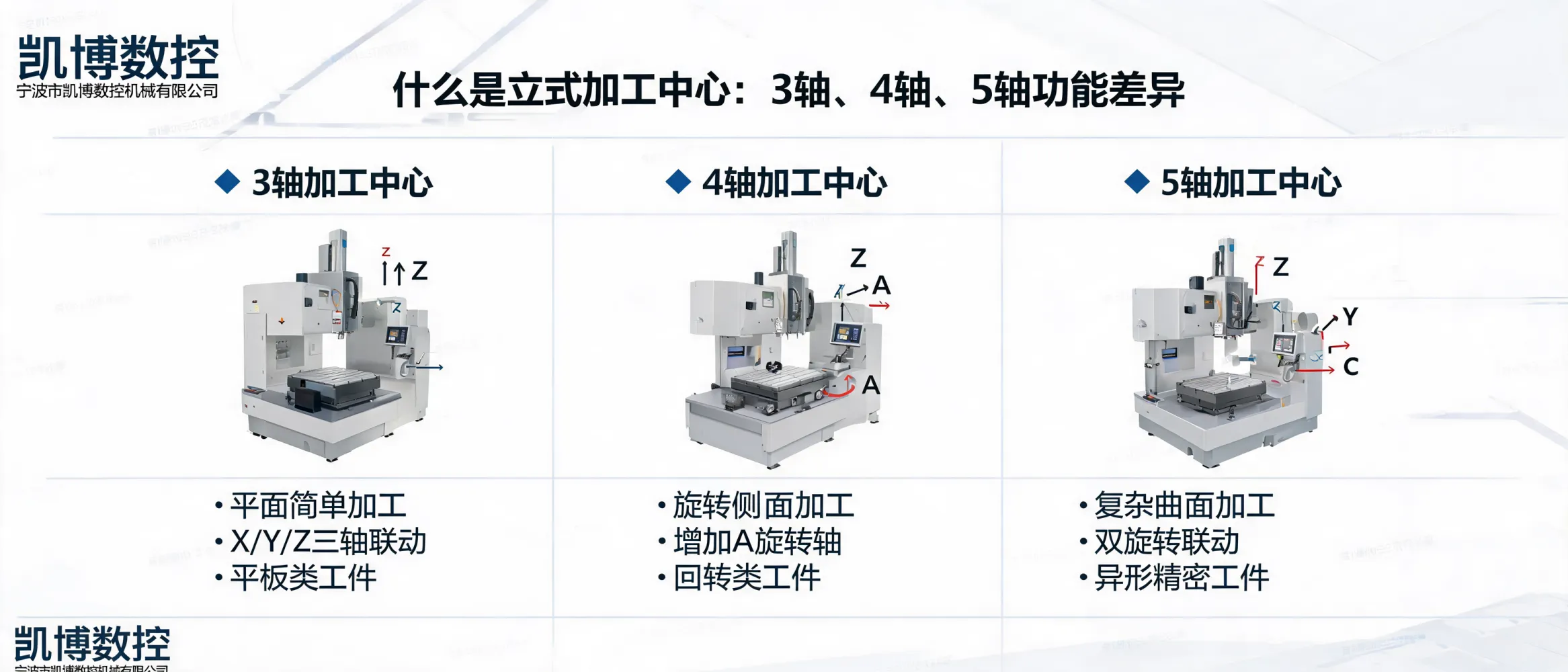
For parts requiring multi-sided machining or complex geometries, Kaibo CNC's 4/5-axis vertical machining centers provide significant advantages in reducing setup times and improving accuracy through continuous machining.
Step 2: Processing Requirements – Matching Capabilities to Needs
Precision & Tolerance Requirements
Machine precision capabilities must exceed your part tolerance requirements:
- Positioning accuracy and repeatability specifications
- Spindle runout and thermal stability
- Tool change repeatability
- Measurement and inspection integration
Kaibo CNC machines maintain strict precision standards, with many models achieving positioning accuracies of ±0.003mm and repeatability of ±0.001mm.
Production Volume & Cycle Time
Production requirements directly impact machine configuration:
- Batch size and production volume
- Cycle time targets and efficiency needs
- Setup time considerations
- Automation requirements for unattended operation
High-volume production may benefit from Kaibo CNC's custom automation solutions, including robotic loading/unloading and pallet changers.
Process Type Considerations
Different machining processes demand specific machine capabilities:
Milling Operations
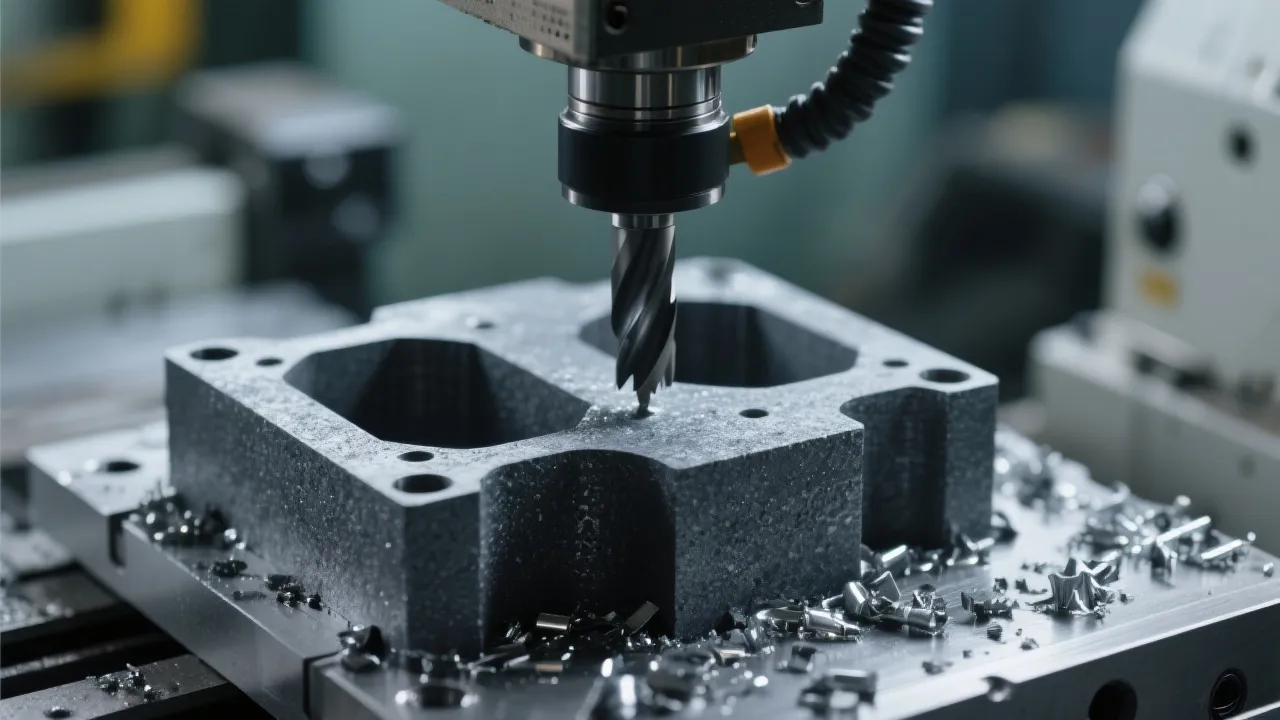
Requires stable spindle power, rigid machine structure, and versatile tooling options
Engraving & Fine Detail
Demands high spindle speeds, precise servo control, and fine tooling compatibility
Drilling & Tapping
Requires rigid tapping capabilities, tool length compensation, and chip evacuation
Complex 3D Contouring
Needs advanced control systems, high feed rates, and smooth motion control
Step 3: Machine Type Selection – Aligning Solutions with Requirements
Ningbo Kaibo CNC offers three primary machine categories, each optimized for specific manufacturing scenarios:
Vertical Machining Centers (3/4/5 Axis)
Ideal for: Medium to large workpieces, ferrous metal machining, complex multi-sided components, and high-precision requirements
Key Advantages:
- Superior rigidity for heavy cutting operations
- High torque spindles for metal removal efficiency
- Multi-axis capabilities reduce setup times and improve accuracy
- Excellent thermal stability for consistent performance
Typical Applications: Mold & die making, automotive components, aerospace parts, complex mechanical parts
CNC Engraving and Milling Machines
Ideal for: Precision engraving, high-speed machining of non-ferrous metals, small to medium workpieces, and intricate detail work
Key Advantages:
- High-speed spindles (up to 30,000 RPM) for fine detail work
- Excellent surface finish capabilities
- Energy-efficient operation for cost savings
- Precision micro-machining capabilities
Typical Applications: Electronic components, decorative parts, precision instruments, signage, mold texturing
Custom CNC Machines
Ideal for: Unique manufacturing challenges, specialized processes, integration with existing production lines, or specific industry requirements
Key Advantages:
- Tailored specifically to your production requirements
- Optimized for your unique workpiece geometry
- Integration with specialized tooling or automation
- Solutions for industry-specific challenges
Typical Applications: Specialized automotive parts, medical device manufacturing, unique aerospace components, industry-specific production lines
Decision Framework: Choosing the Right Machine
Use this structured approach to evaluate your requirements against available machine capabilities:
- <